The setup
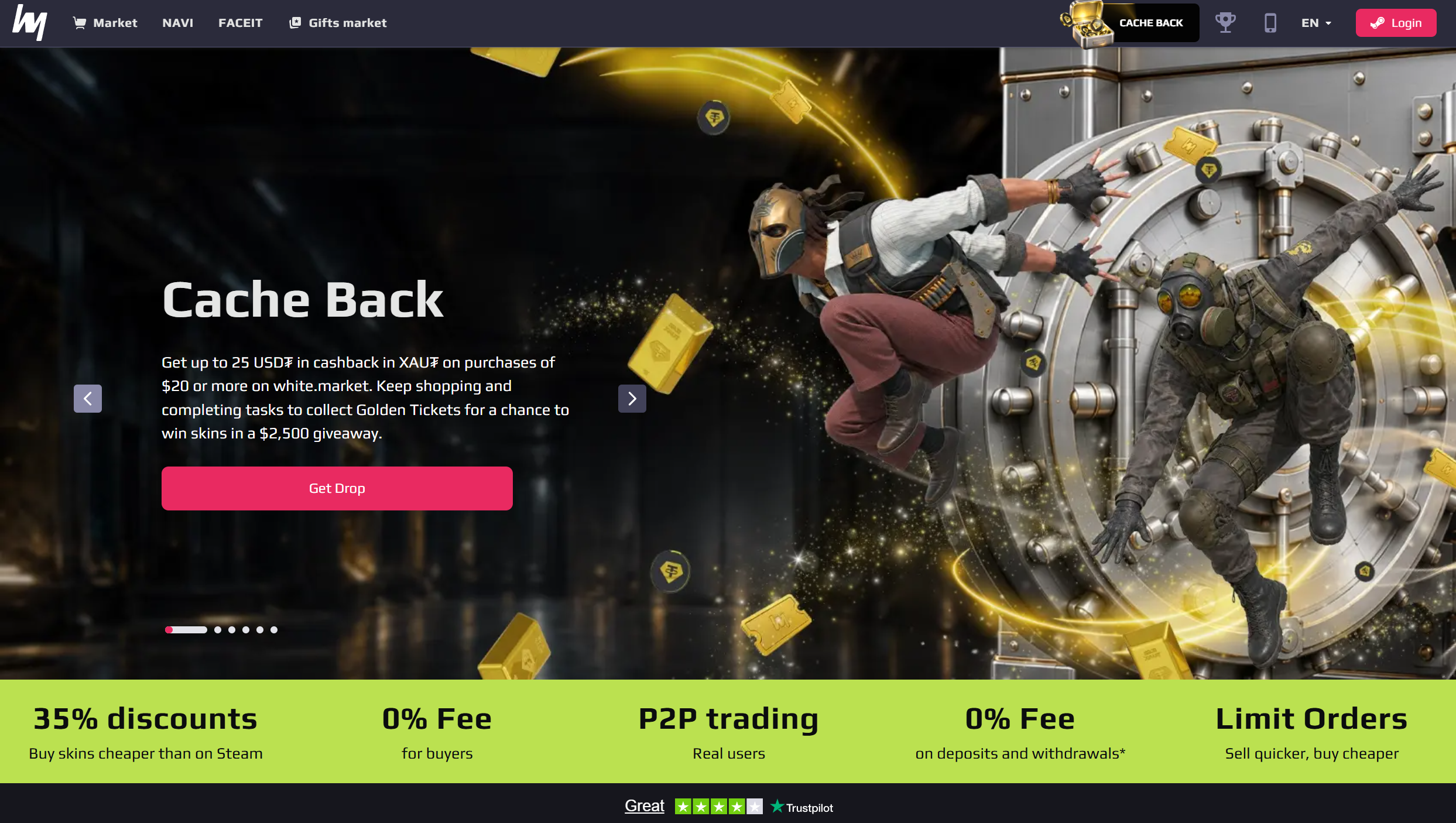
On White.Market, users list and sell in-game items (skins) used in Counter-Strike, and other users buy them. The platform takes a small commission on every trade. Skins sell for as little as $3, averaging between $50 to $70, and the occasional trade even tops $100,000. Payments are accepted and made in both fiat and crypto. This profile often makes risk departments at most Payment Service Providers (PSPs) wary.
"Before we met Tonkr, we were in talks with a big number of payments solutions. But for maybe 70–80% of them, they were rejecting us because of their incorrect perceptions of our risk profile."White.Market
For 3.5 years, White.Market had processed through a single provider, with a clean trading history. One provider is one point of failure, so the business wanted a second and ideally a third.
The problem
Two things stood out to provider risk teams.
The first was a keyword pairing. Early search engine indexing had linked the site with both crypto and weapons, and provider reviews picked up the same combination. The weapons are items in a game, but automated screening systems can't tell the difference, so applications usually ended in a decline or slipped down providers' approval priority lists.
The second was the range of skin values, which can jump from $200 to $20,000 after a single esports tournament, so a $50,000 payment for what monitoring systems treat as a cheap digital asset gets flagged, even when the price is the going market rate.
White.Market's user controls were already in place, where it introduced user KYC verification, with full verification for users trading in the region of 6 figure levels. KYC declines for users were around 5%, against an industry norm of 40%. The risk framework was sound, and the declines traced back to payment providers' perception of the business.
What Tonkr did
Conversations with PSPs included their legal and compliance teams and not just sales. Tonkr started with a full audit of White.Market's payments and banking arrangements, covering its current and ideal operating models, contracts and the gaps between them. Tonkr then worked out which Tier 1 providers would consider onboarding a marketplace with White.Market's ambitions, structure and risk profile.
"Two Tier 1 providers had rejected us around a year before we spoke with Tonkr. Akil helped to establish relationships of trust with the right guys. Throughout the onboarding process, we continued to show them our infrastructure, our turnover, and our plans for the future, which convinced them to work with us. Tonkr was central in the whole process, making sure it was a success."White.Market
Tonkr also prepared the team to present its case in a format that PSP’s compliance teams would accept. Each application led with the controls behind the platform: the KYC framework, transaction monitoring tuned for high-value digital items, and the compliance position of its parent company, W Group, which is MiCA-aligned and regulated in several jurisdictions. It also made clear that White.Market is a platform connecting buyers and sellers and not the merchant of record for the items.
White.Market’s business model remained the same—providers' view of White.Market was the gap, so the work focused on showing both sides where the marketplace sits within each provider's scheme, credit, reputational and market risk frameworks. Rebuilding the platform would have taken an estimated 12–18 months, plus 3+ months for banking and processing approvals. White.Market also kept what the business is built on: W Group's crypto expertise, a gaming-native experience, and tournament partnerships including its Navi team sponsorship and its work with ESL and Faceit.
What changed for the business
After onboarding across banking, FX and payments, White.Market went live with Nuvei and Airwallex and kept Zen. Three PSPs meant redundancy and resilience on the fly, and its banking and FX arrangements were upgraded in the same project.
What's next for White.Market
White.Market is expanding into Latin America and Asia-Pacific, with China a longer-term prospect. Each region brings its own payment methods, provider relationships and compliance frameworks, and the three-provider setup is the base for all of it. The company's goals are to lead the in-game items market in Ukraine, rank in the top three in Europe and reach the top five to seven globally.
If you are in the same position
If you are deciding whether to source atypical solutions yourself or bring in a payments specialist, Tonkr offers a free audit. Send a short description of your business along with any issues or requests; we will share our feedback within 24hrs—The work then starts. Click the button below or visit Tonkr.io to get started.