The business
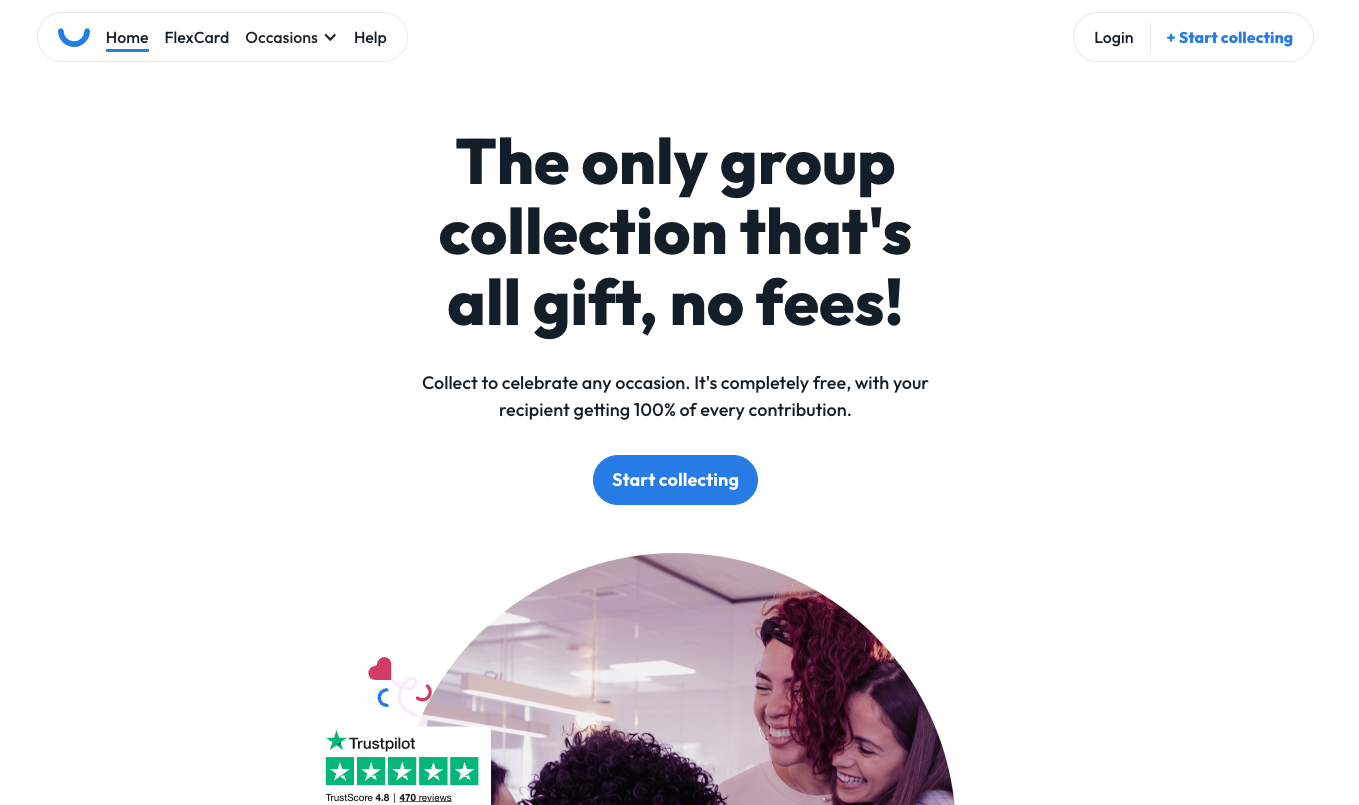
GiftRound solves a problem almost everyone has lived through. A colleague is leaving, a friend is getting married, a baby is on the way, and someone needs to quietly collect money from twenty people without sending fifteen PayPal requests. The platform replaces the envelope-on-the-desk with a shared link, a pot, and (if the group chooses) a voucher payout to the recipient.
It's the digital version of the office collection. We've just made it possible to do it remotely, with proper tracking, and without anyone having to chase contributions over WhatsApp.
The pandemic is what made it stick. With offices closed and families scattered, the old physical-collection model just stopped working. GiftRound picked up users who had no alternative, and a lot of them never went back.
The pivot
Growth brought a problem GiftRound hadn't fully priced in. The original model let organisers collect cash, which GiftRound would then pay out to the recipient's bank account or hand over as a voucher. Cash was a popular option. It was also the more painful one.
Cash payouts came with serious KYC and AML obligations. Every recipient needed verifying. Every payout needed monitoring. The compliance overhead was eating the business alive.
So GiftRound made the call: cash payouts out, vouchers only. On paper, simple. In practice, it meant dropping roughly 30% of collections overnight, the people who specifically needed cash.
It hurt. But the alternative was scaling a compliance department faster than we were scaling revenue. We had to pick.
The upside was real, though. A vouchers-only model opened the door to a "no fees for users" proposition, funded by the discount GiftRound captures on the multi-retailer voucher it buys in bulk. Users pay nothing. The economics work because of the spread.
We went from being a payments business that happened to sell vouchers to being a vouchers business that happened to collect money. Much simpler company to run.
The blocker
The “no fees” model only works if payment processing is cheap enough that the voucher discount covers both platform costs and processing fees. Under GiftRound's existing setup, it wasn't.
Our previous provider had decent technology but the fee structure was built around higher-margin fintech models. When we tried to push fees down to make no-fees viable, we hit a wall.
There was a second problem, and it might have been the worse one. The relationship was transactional. No dedicated contact, no proactive guidance, no sense that the provider was invested in GiftRound’s success. For a business in the middle of a hard pivot, that silence was deafening.
When you're reshaping your whole model and you need a payments partner who actually understands what you're trying to do, a faceless portal doesn't cut it.
Where Akil came in
That's where Akil came in. He runs Tonkr, a payments consultancy that matches UK and European businesses with the right partner for their stage and model. He'd been watching GiftRound's pivot closely and noted Visa and Mastercard's need for them to remain outside the flow of funds, requiring a regulated EMI to take away the complexity.
Akil got it immediately. Most people you explain the model to, you lose them at 'gifting collections and discounted vouchers without fees.' Akil understood what we were building before we'd finished the sentence. And he could translate it into the language payments providers actually listen to.
Akil made the right introduction to the right partner, Ryft, a payments platform whose fee structure and account-management model were a much better fit for what GiftRound was becoming. The lower fees mattered, but Craig is clear they weren’t the whole story.
The support has been as valuable as the pricing. We have a dedicated account manager. We can pick up the phone. They help us think through regulatory questions we’d otherwise be guessing on. That’s a different relationship from what we had before.
For a founder running lean through a pivot, that combination is the whole game. Cost structure that works, plus a partner who actually picks up, alongside reliable modern payment methods including Apple Pay and Google Pay.
What changed
With Ryft in place, the no-fees model stopped being theoretical and started being operational. Collections volumes, which had dipped after the pivot, are recovering. The model unlocked a growth path GiftRound hadn’t had before.
That path is the white-label platform. Instead of GiftRound collecting money for a generic multi-retailer voucher, brands can plug into GiftRound’s collection mechanics and offer group gifting for their own specific vouchers. National Book Tokens is live. Miconex, which powers 70+ Town and City Gift Cards across the UK, is live.
This is where the business is going. A wedding gift for a couple moving to a new city should be a City Gift Card, not a generic voucher. A retirement gift for a teacher should be a National Book Tokens voucher. The white-label play lets us be the rails for all of it.
Ryft plays a quiet role here, but it’s the kind that matters. Corporate clients want clean reconciliation. They need to know whose money is whose, and that funds are properly safeguarded. Ryft holds each brand’s funds in a ring-fenced sub-account, which means the financial plumbing matches the commercial model.
Reconciliation is one of those things nobody talks about until it breaks. Ryft's setup means we don't have that conversation with our clients. They just see a clean number.
What's next: the US
The next chapter is the American market. The mechanics are already lining up. Ryft’s US payment capabilities give GiftRound a route into US bank accounts. Tillo, a voucher aggregator with deep US retail relationships, supplies the API for sourcing vouchers at scale.
The economics are harder. US payment processing costs are higher than UK. US voucher discounts are leaner. The "no fees" math may not transfer cleanly.
We don't want to compromise the model. The simplicity is the point. But we also need to make the unit economics work in a more expensive environment. That's the puzzle we're working on now.
Ongoing marketing
GiftRound hasn’t stopped marketing to consumers. Organic social, Google Ads, and a 60,000-person email list built over years all still run. The challenge is the same as always: group gifting is a "forgotten need." People don’t search ahead. They need to remember GiftRound at the exact moment a colleague announces they’re leaving or a friend shares a due date.
It's about being there when the wedding announcement lands, when the leaving-do gets scheduled, when the baby arrives. You don't search for us ahead of time. You just need us to be the name you remember when it counts.
Key takeaway
Without Akil’s intervention, GiftRound might have been searching for another 12 months. He connected GiftRound with the most ideal tech partner to take them to the next level. The result was a payments setup that actually fits the model, not just cheaper, but built for what GiftRound was becoming.